Automated Telecom Invoice Analysis & Reporting System
Developed a Windows-based application using C# and ADO.NET that automates the generation of monthly telecom usage reports by analyzing invoice data from carriers like Rogers, Verizon, and Bell.
This project involved building a Windows desktop application that automates the creation of monthly telecom usage reports by processing and analyzing carrier invoice data. The application supports invoice formats from major providers such as Rogers, Verizon, and Bell, and delivers insights into usage patterns, cost distributions, and call volumes for each employee in the organization. The tool was built with C#.NET and ADO.NET and tailored for internal IT and finance departments seeking operational efficiency and cost transparency.
Key Features
Carrier-Specific Parsing Logic: Custom parsers for Rogers, Verizon, and Bell invoices that handle varying formats and business rules.
Dynamic Report Generation: Automatically creates structured reports based on call volume, department usage, and user-level billing.
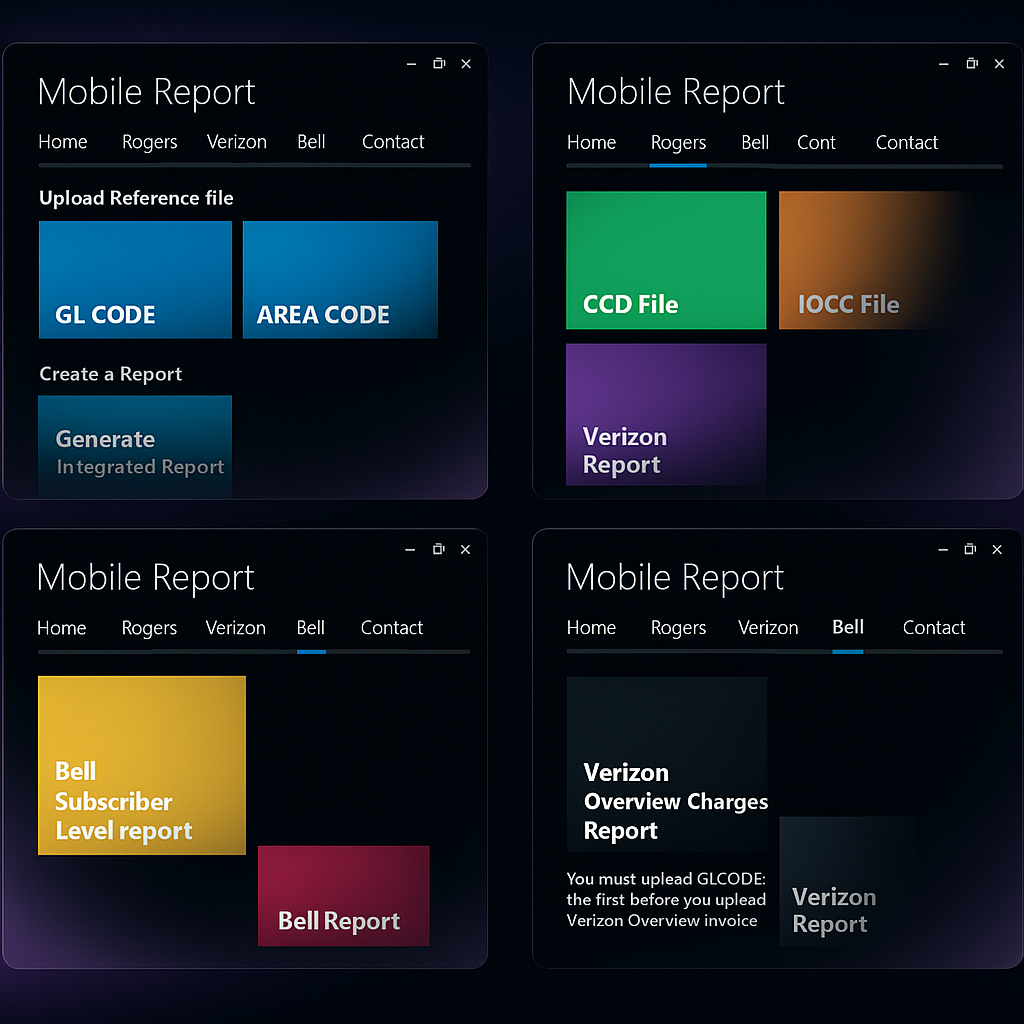
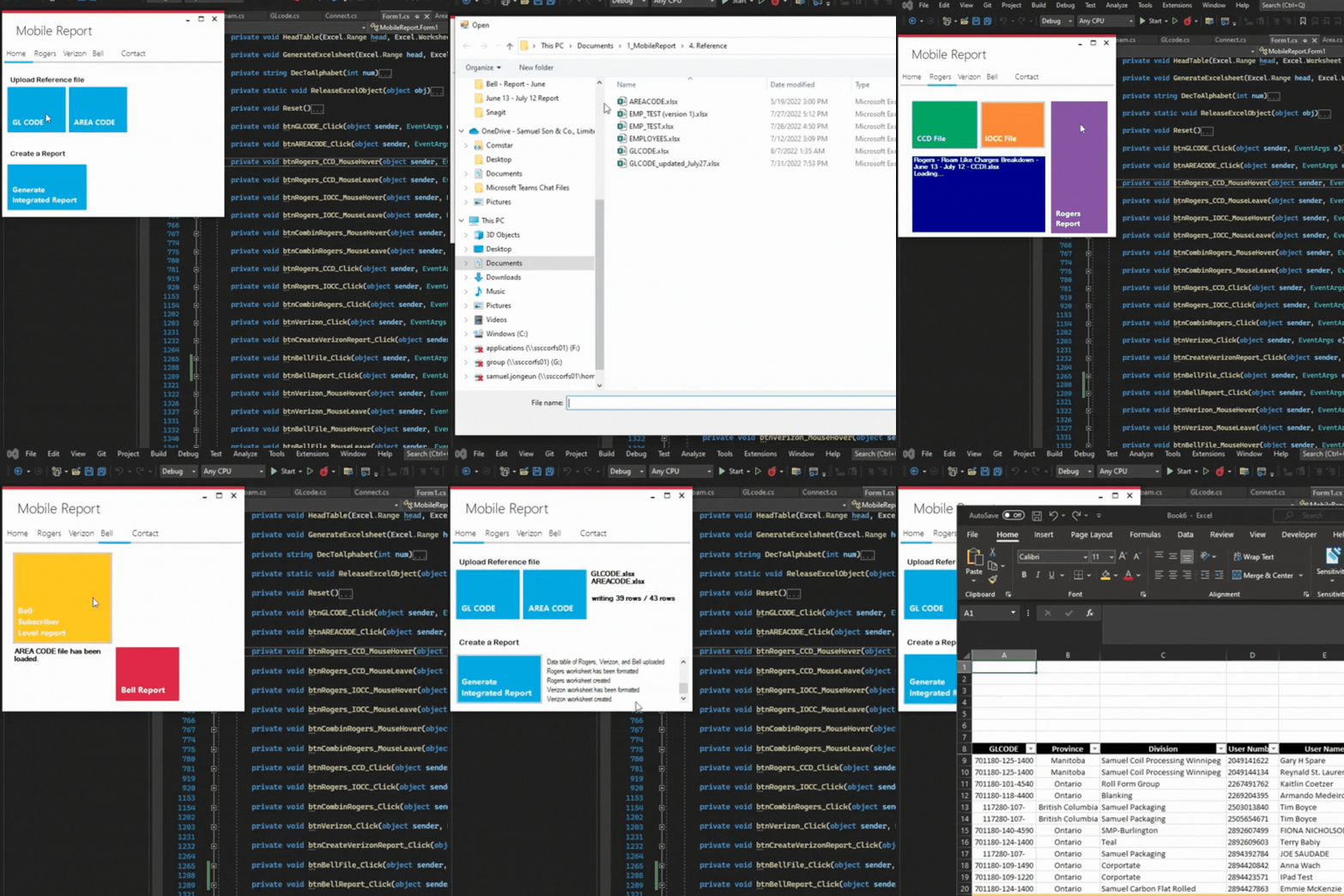
Reference File Upload: Users can upload GL Codes and Area Codes to enrich and filter report data for accurate cost allocation.
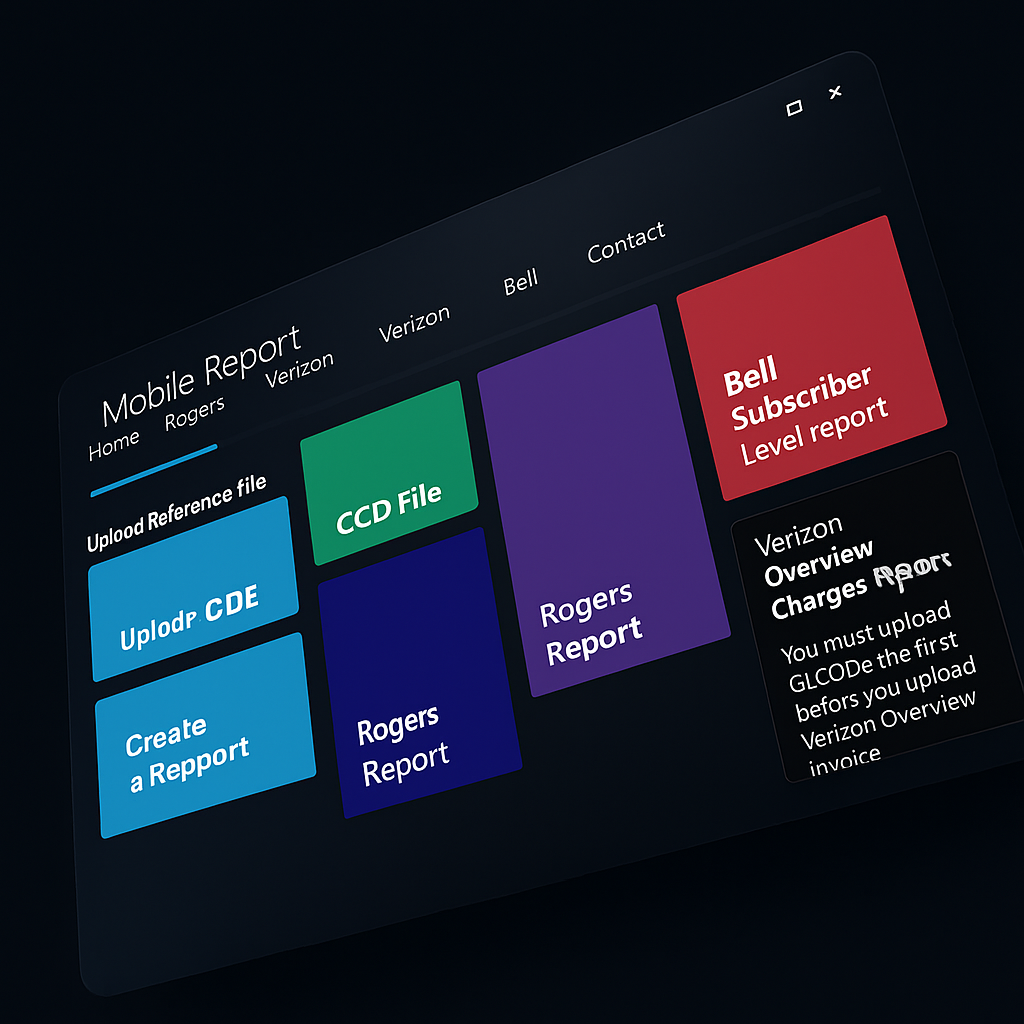
User-Friendly Interface: A clean tabbed UI for managing different carriers and generating reports with just a few clicks.
Technologies Used
C#.NET (Windows Forms): Core framework used for building the desktop interface and processing logic.
ADO.NET: For database connectivity, data retrieval, and transactional control.
Microsoft Excel Interop: To format and export final reports in Excel.
Challenges and Learnings
One of the major challenges was standardizing the reporting logic across different carriers with inconsistent invoice formats. This required developing robust data normalization routines and validation checks. Another challenge was maintaining performance as the dataset scaled with monthly usage. Implementing proper indexing and batch processing logic significantly improved execution time and user experience.
Outcome
The solution successfully reduced manual processing time by over 80%, replacing repetitive Excel-based workflows with automated, accurate reporting. It enabled IT and finance teams to monitor telecom expenses by user and department, leading to better budget control and transparency. The application is now used company-wide as a reliable internal reporting tool.This project demonstrates your ability to leverage automation and streamline workflows, which is highly relevant for design engineering portfolios focused on efficiency and innovation.